


SUBTOTAL:
$0.00




News
The Hidden Costs Of A Bad Desk Setup For Remote Developers
John BeaverRemote developers depend on their work environment to stay focused, productive, and mentally sharp. When a desk setup falls short, the impact is rarely immediate or obvious. Instead, the hidden costs of a bad desk setup for remote developers build quietly over time through reduced output, rising fatigue, and growing frustration.
A poor desk setup does not always involve broken furniture or obvious discomfort. It can be as simple as a fixed desk height, limited space to move, or a layout that encourages long periods of sitting without adjustment. For remote developers working full days at home, these issues compound quickly.
Understanding the hidden costs behind poor desk setups helps developers, team leads, and companies make better decisions about remote work environments. It also shows why investing in better desk solutions supports stronger performance, healthier routines, and long-term productivity.
How Poor Desk Setups Affect Focus, Energy, and Daily Output
Remote development work demands long stretches of concentration. Coding, debugging, and problem solving require sustained mental effort, often with limited breaks. When a desk setup does not support the body, physical discomfort becomes a constant distraction.
Fixed-height desks force developers into static postures for hours at a time. This encourages sedentary behaviour, which can lead to stiffness, fatigue, and reduced circulation. Over time, discomfort affects attention span and slows task completion, even if the developer remains technically capable.

Energy levels also suffer. Poor posture and lack of movement contribute to mid-day slumps, slower reaction times, and reduced engagement during meetings. Developers may take more breaks, switch tasks frequently, or struggle to maintain momentum across long work sessions.
These effects often go unnoticed by managers because output declines gradually rather than suddenly. The real cost appears in missed deadlines, slower project progress, and lower overall productivity across remote teams.
The Financial Impact on Teams and Companies
The hidden cost of a poor desk setup extends beyond individual developers. For companies managing remote teams, small inefficiencies multiply quickly across multiple people and projects.
Lost productivity translates directly into higher development costs. When developers take longer to complete tasks, projects consume more hours, and budgets stretch further than planned. Over time, this affects delivery schedules and limits a team’s capacity to take on new work.
There are also indirect costs. Developers dealing with ongoing discomfort are more likely to report health issues, take time off, or disengage from work. This increases the burden on other team members and can affect morale across the remote team.
Retention is another factor. Skilled remote developers have options. If a work setup consistently limits comfort and performance, developers may seek roles with better support. Recruiting and onboarding replacements takes time, increases costs, and disrupts team rhythm.
For companies, improving desk setups is often far less expensive than absorbing the long-term cost of reduced productivity and turnover.
Why Desk Design Matters More in Remote Work Environments
In traditional offices, desks are often standardised and supported by shared facilities. Remote developers, however, are responsible for their own setups, often working from spare rooms, dining tables, or temporary spaces.
{{ spec_dual_hardwood_desk }}
Without guidance, many remote workers default to furniture that was not designed for full-time work. This creates setups that limit movement and encourage long periods of sitting, increasing the risk of discomfort and fatigue.
Height-adjustable desks and sit-stand desks address these issues by allowing developers to change posture throughout the day. Movement supports circulation, reduces strain, and helps maintain focus during demanding tasks.
Desk layout also plays a role. Limited surface space, poor cable management, and awkward screen positioning increase friction during daily work. Over time, these small obstacles contribute to frustration and slow progress.
Well-designed desks support better work habits by making movement easier and workspaces more adaptable. For remote developers, this flexibility supports consistent performance across long workdays.
Practical Steps to Improve Remote Desk Setups
Improving a remote desk setup does not require a complete workspace overhaul. Small, targeted changes can reduce hidden costs and support better daily performance.
Start with desk height. A height-adjustable desk allows developers to alternate between sitting and standing based on task and comfort. This reduces sedentary behaviour and supports more natural movement.
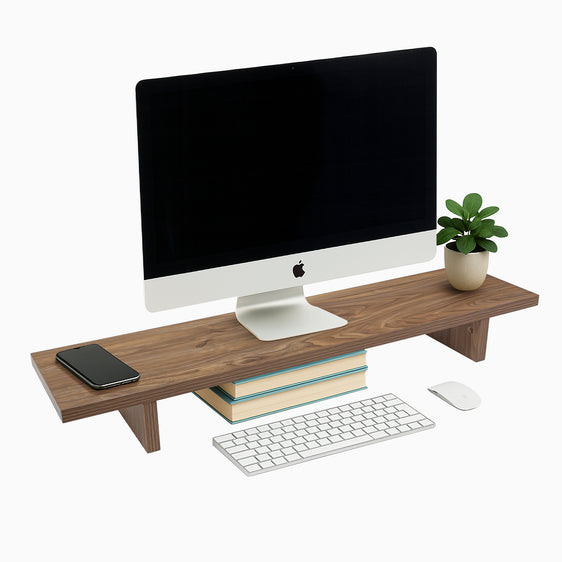
Screen position matters. Monitors should be positioned at eye level to reduce neck strain, while keyboards and pointing devices should support neutral wrist posture. These adjustments help prevent discomfort during long coding sessions.
Workspace organisation also affects focus. Clear desk surfaces and tidy cable management reduce visual clutter and help developers stay engaged with tasks rather than their surroundings.
Desky designs desks that support these needs for remote and hybrid work environments. Their adjustable desks provide stability, flexibility, and ease of use, helping developers build setups that support long-term comfort and productivity.
{{ spec_minimal_monitor_stand }}
Building Healthier Remote Work Habits Over Time
Desk setup is only part of the equation. Long-term improvement comes from pairing the right furniture with healthier work habits.
Remote developers benefit from regular posture changes, short movement breaks, and clear boundaries between work and rest. Adjustable desks support these habits by making movement convenient rather than disruptive.
Companies can support this by encouraging consistent setup standards across teams and providing guidance on healthy desk use. When developers feel supported in their work environment, engagement improves, and hidden costs decline.
Investing in better desk solutions is not about luxury. It is about reducing friction, supporting health, and helping remote teams work at their best over time.
For developers and companies looking to improve remote work performance, reviewing desk setups is a practical place to start. Exploring adjustable desk solutions from Desky can help create workspaces that support focus, comfort, and sustainable productivity.

You may also like

Which Lighting with Lamps Is Best for Your Space?
The way you light your workspace shapes how it feels to use every day. It affects comfort, focus, scre...
Jun 03, 2026

How to Position Your Desk Lamp for Reduced Glare on Your D..
A good desk lamp can make long work sessions easier on your eyes, but placement matters just as much a...
May 28, 2026

Your Complete Guide to Desk Lamp Features and Choosing the..
A smart desk lamp can change the way your workspace feels and functions. Good lighting helps you stay ...
May 27, 2026

How to Reduce Eye Strain with Desk Lamp
If your eyes feel sore, dry or tired after a few hours at your desk, your lighting setup may be part o...
May 21, 2026